
Trotsky’s Yahrzeit
It’s summertime for socialism, which has risen zombie-like from the ash heap of history. As all utopian faiths do, it has its eschatology, priests, and catechisms.
Card-carrying members of the Fourth International and those of you who follow revolutionary socialist movements on Instagram will undoubtedly realize that Leon Trotsky’s Yahrzeit is soon upon us.
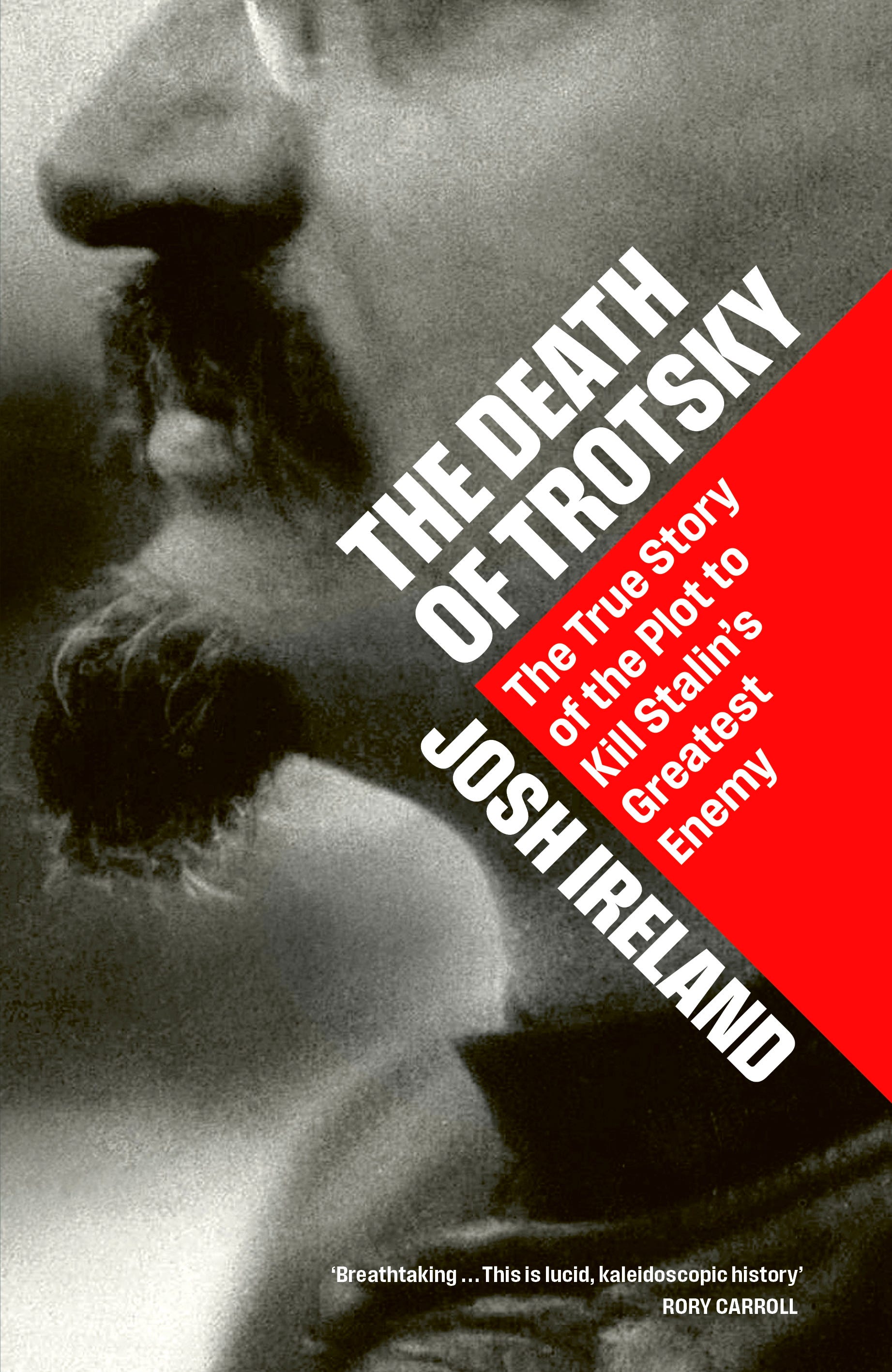
However, it is the publication of The Death of Trotsky: The True Story of the Plot to Kill Stalin’s Greatest Enemy by London-based Josh Ireland that put him back on my radar. This short book is marvelously paced and comprehensively researched. Trotsky was murdered by Ramón Mercader in Mexico on August 21, 1940, at Joseph Stalin’s order.
The two men despised each other because of personality, style, and policy differences, according to British historian Simon Sebag Montefiore. Trotsky was Stalin’s greatest enemy, for he embodied opposition to his one-man rule at the top of the Communist Party. In laying out the assassination story, Ireland provides readers with multiple artfully drawn biographical sketches, contextualizes Trotsky’s knotty relationships with Vladimir Lenin and Stalin, and broadly lays out what we need to know about how Czarist Russia became the Soviet Union.
More about the assassination later. For now, it is enough to recall how Aleksandr Solzhenitsyn reckoned that from 1917 to 1959 the Soviet regime devoured 60 million of its own citizens. Stalin is credited with the bon mot that “A single death is a tragedy; a million deaths is a statistic.” Trotsky’s death was neither.
Jewishly illiterate
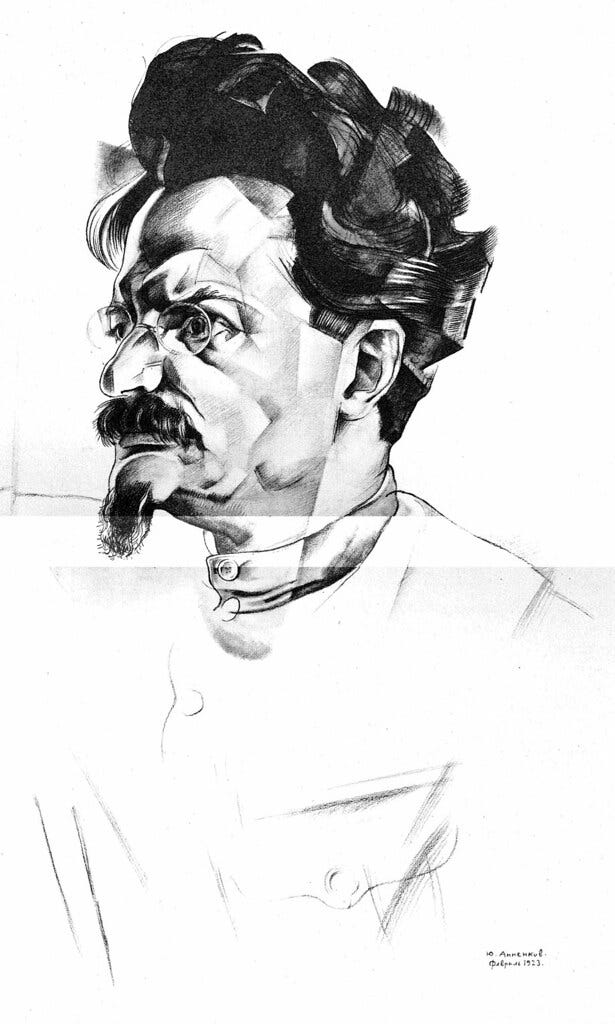
Lev (Leiba) Davidovich Bronstein was born into a comfortable non-observant Jewish* farming family in southern Ukraine on October 26, 1879. The blue-eyed Lev lacked Yiddishkeit, but was gifted in math, writing, and oration. The world would come to know him by his nom de guerre Leon Trotsky, a fiery revolutionary who’d easily shaken off Jewish civilization for a New Covenant – Karl Marx’s 1848 Communist Manifesto. Marxist eschatology, like other faith traditions, has its dogma, clerical class, catechisms, and conception of utopia. If nirvana for Jewish Orthodox true-believers is an Eden-like messianic age with a rebuilt Jerusalem Temple and animal sacrifices, if for Christians bliss is a Millennial reign of Jesus Christ and if for Muslims it is Judgment Day which also brings resurrection – then what Trotsky would have hankered after was full-blown communism: a classless, stateless world which lived by the creed “from each according to his ability, to each according to his needs.”
Under the Huppah
Yet Trotsky did one Jewish thing – he had a traditional wedding. Alexandra Sokolovskaya, a fellow Russian Social Democratic Labor Party activist, besotted him. About to be exiled by the czarist authorities to Siberia (1898), after two years in a prison in Odessa, the only way she would be permitted to join him was if they married. Historian Robert Service, whose outstanding 2009 biography Trotsky is my go-to reference, explains what happened (even if he muddles the ceremonial details):
Since Lev and Alexandra were from Jewish families and in this period there was no civil marriage, a rabbi was contacted to carry out the ceremony. There would have been no difficulty in finding ten Jewish revolutionaries as witnesses in order for the proceedings to have religious and legal validity. The obligatory prayers were spoken. The rings were exchanged. Formal submission to the faith of their ancestors was a small price to pay for Lev and Alexandra to become man and wife. It was the last such compromise that either of them would make.
For Trotsky, Revolution always came first. When he decided in 1902 to escape Siberia and ultimately abandon Alexandra and their daughters Nina and Zina, there would be no Jewish bill of divorce (get). Anyway, his second wife, Natalya, was not Jewish.
Upon arriving in London, Trotsky encountered Vladimir Lenin in 1902 and collaborated with him on the influential European newspaper Iskra, which was smuggled into Russia. He liked Lenin’s idea of a tightly run, secretive, authoritarian party, though sometimes he didn’t, and they tangled ideologically. He opposed Lenin’s dictatorial inclinations when he could not sway him.
Trotsky was pliable. At that early stage of his career, he backed the reformist, pro-parliamentary Menshevik faction within the Russian Social Democratic Labor Party over Lenin’s radical, uncompromising Bolsheviks. However, when he thought intramural socialist bickering had gone too far and was undermining the Revolution, he stood above the fray, working for reconciliation and unity.
Trotsky’s theoretical contribution to the communist faith was the perplexing concept of “permanent revolution,” which he adapted (at times with attribution) from another Jewish revolutionary, Alexander Helphand, better known as Parvus. Though, as Dmitri Volkogonov, the iconoclastic post-Soviet historian, noted in his 1996 Trotsky biography, the notion of permanent Revolution is actually traceable to communism’s founding prophets, Marx and Friedrich Engels (to give a non-Jew his due). They foretold a chain reaction – that each revolutionary stage had to be followed by a further, more intense one.
For Trotsky, this perpetual Revolution could not – ought not – be restricted to Russia alone. “By force of historical necessity, the triumphant proletariat will be compelled also to break out of the nation-state framework; that is, they will have to strive consciously to make the Russian revolution the prologue to world revolution.”
The workers of the world had to unite, but in mostly agrarian Russia, the imperative question was who could lead a revolution? Both Lenin and Trotsky believed that the success of any Russian Revolution depended on professional revolutionaries whose Party would serve as the Revolution’s vanguard. From Russia, the embers of the Revolution were expected to spread to more industrially advanced Germany and beyond.
As chairman of the St. Petersburg Soviet – meaning council – Trotsky was a leader of the failed 1905 Russian Revolution against the czar, which led to his second Siberian exile. The Czar had bought time by offering autocratic concessions and retaining military backing. Trotsky again escaped to London (1907) and later worked as a journalist based in Vienna. He spent the Great War (1914-1918), which he opposed, moving around Switzerland, Paris, and by 1917 New York City, where he lived in the Bronx and worked out of the offices of the socialist newspaper Novy Mir on St. Mark’s Place on the Lower East Side. He even wrote for the Yiddish democratic socialist mass-circulation Forward until he broke with the newspaper because it felt compelled to back Washington’s belated decision to enter WWI on April 6, 1917.
Czar Abdicates
The communists did not overthrow the czar. General upheaval, strikes, and chaotic demonstrations with WWI in the background – Russia was an Allied power with Britain and France – led to the February 1917 revolution, which impelled the czar to abdicate.
An unstable, fragmented, liberal-leaning regime led by Alexander Kerensky emerged. Angry that he hadn’t immediately pulled Russia out of the war and for all sorts of other arcane ideological reasons, mainstream socialists refused to help him govern.
Now reconciled, Lenin and Trotsky were determined to overthrow Kerensky, which they did in November 1917, violently by taking over the banks, post office, and telegraph in Petrograd and politically by bullying the Mensheviks and Socialist Revolutionaries out of the Congress of Soviets.
Once the Bolsheviks solidified power, they criminalized political opposition to their rule.
Red Jew
Lenin, Stalin, and Felix Dzerzhinsky (founder of the Cheka secret police and originator of the Red Terror) were not Jewish, but many party leaders were.
Judaism was a religion under the czar. As religion was essentially outlawed under communism, his Soviet ID card categorized Trotsky “nationally” as yevrei or Jew. As a universal socialist who despised nationalism, he must have been irritated by having to declare any such identity. After all, he had denounced the socialist Jewish Bund and all manner of Zionists for their contrasting fidelity to Jewishness. He once told a group of Orthodox rabbis that any bunch of random workers was dearer to him than all the Jews combined. Only in the wake of Hitler’s rise to power in 1933 did Trotsky’s unalterable opposition to the idea of a national Jewish homeland fleetingly waver.
****
After the 1917 Bolshevik Revolution, Trotsky was appointed Commissar for Foreign Affairs and attended the Brest-Litovsk conference between Germany and Russia. He wanted to pull Russia out of the fight against Germany without a treaty, but gave in to Lenin’s insistence on an accord.
He was appointed Commissar for Military Affairs (1918), and he rose to the challenge of creating the Red Army that fought within and beyond Russia’s borders. He led the Reds to victory in regional civil wars and, by 1920, defeated the Whites who had sought to restore the Russian Empire. He also put down domestic insurrections against Bolshevik dictatorial rule. The counterrevolutionary Whites had hunted for his father in Ukraine, wanting to kill him. However, it was the Reds who confiscated the Bronstein family farm and property. Trotsky was not sentimental; the most he would do was to get his father a job at a state grain mill. The old man died of typhus in 1922.
His last major appointment was as Commissar of Transportation.
Within the Politburo, Trotsky supported executions and other harsh measures against recalcitrant farmers, merchants, and other dissidents who resisted nationalizations and central economic control. When, in 1921, Herbert Hoover – a hyper‑competent architect of large‑scale humanitarian food relief – worked to head off a communist-driven famine in the Soviet Union, Trotsky absurdly denounced him for plotting against Bolshevism.
Demi-God dies
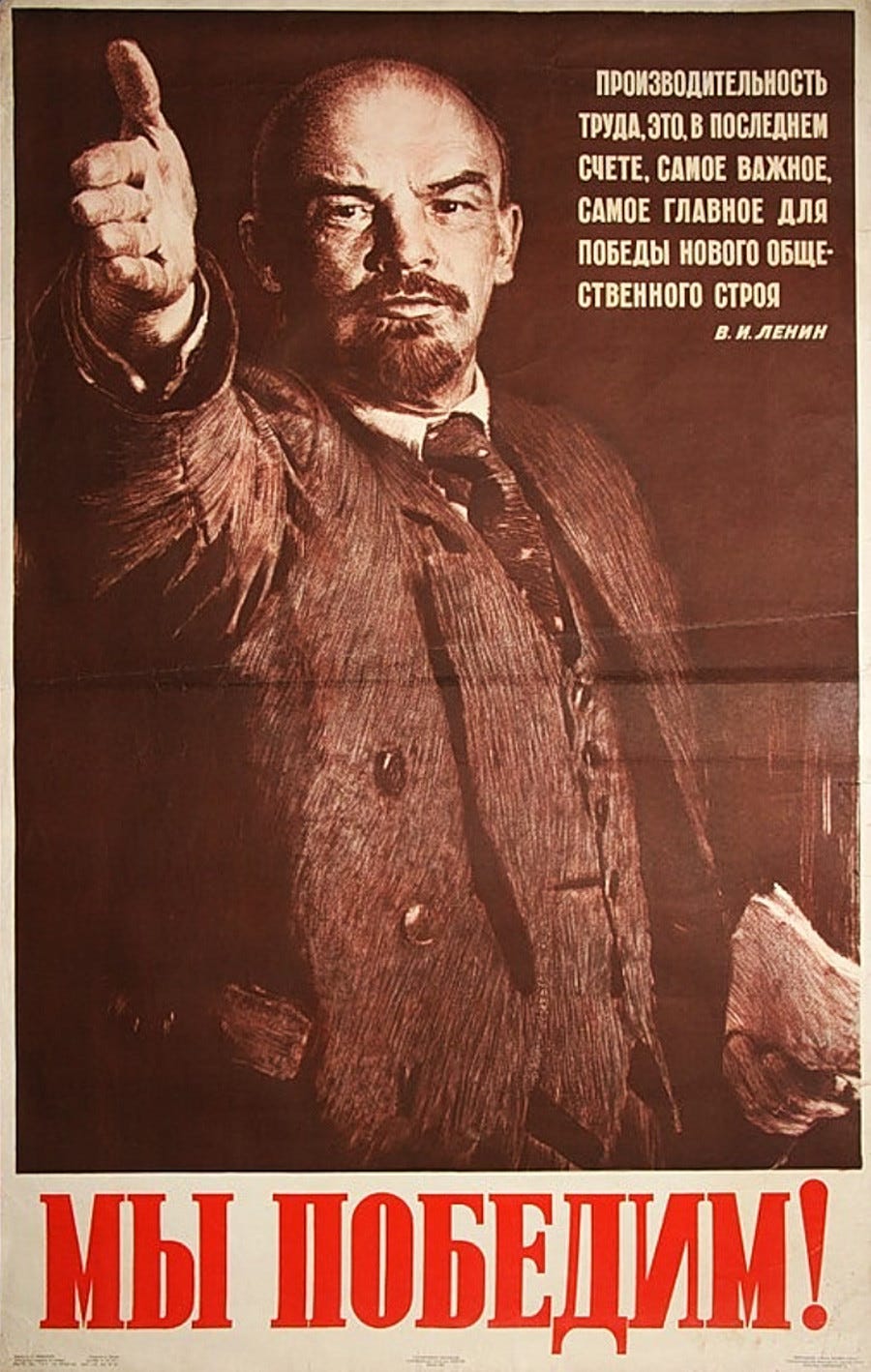
Following Lenin’s death in 1924, who would lead the Communist Party remained unsettled. Trotsky, though brilliant, charismatic, and a warrior revolutionary, lacked retail political skills. He didn’t know how to glad-hand, didn’t smoke, drank little, and was rubbish at banter; he was stunningly inept politically, pushing potential allies like Nikolai Bukharin away. Trotsky hadn’t even bothered to hover around Lenin’s deathbed like all the other party clerics. It is said that he lacked the all-consuming fire in the belly to be a politician. He preferred writing to politicking.
Stalin, in contrast, was able to craft a troika with fellow Politburo members Grigory Zinoviev and Lev Kamenev, both of whom were Jewish. They and so many other Jews, though also innumerable non-Jews, too, like Bukharin, would be paraded before a series of Stalinists show trials between 1936 and 1938 and executed.
For a while, Trotsky led a hard-left opposition to the troika within the Politburo.
In 1925, he was forced to sever his remaining ties with the Red Army, and in 1926, he was ousted from the Politburo and the Central Committee. He was expelled from the Party in 1927. In 1928, he was exiled to Alma-Ata in Turkestan, where he somehow continued to lead communist opposition to Stalin. By 1929, Stalin was strong enough to expel Trotsky from Russia altogether, sending him at age 49 to Turkey.
Exile
The canard promulgated globally across Moscow-aligned communist parties, and networks in Europe and the Americas was that Trotsky, a nefarious plotter, was committed to sabotaging the communist enterprise. If you were a member of the Red Faith, a good Stalinist, you were expected to believe it.
Trotsky became stateless; he lost his Soviet citizenship, had no passport, and had no permanent home. Western powers despised him for being an unrepentant Marxist. Neutral countries did not want to antagonize Stalin by granting him permanent refuge. He spent time in Norway and France until Russian pressure forced their governments to move him on.
He finally found asylum in Mexico, arriving in January 1937. Initially, he, Natalya, and his entourage were welcomed into the “Blue House,” owned by the artist Diego Rivera and his wife, Frida Kahlo. After a falling-out with Diego — a 1937 fling between Leon and Frida soured their relationship — the entourage had to relocate to a nearby compound.
The Plot
A word about nomenclature: Cheka, NKVD, and KGB are all incarnations of the same Soviet state‑security and political police.
The plot to assassinate Trotsky, as told by Ireland, now takes center stage. Sylvia Ageloff, daughter of a Russian Jewish real estate developer on the Lower East Side (he built the Art Deco Ageloff Towers on Fourth Street and Avenue A), was the unwitting lynchpin in the plot to kill Trotsky. Initially, though, the NKVD’s objective was to use her as yet another route to infiltrate the Trotsky clique.
Sylvia had a strong social conscience, was trained in psychology, and worked as a municipal social worker. Single, not especially stunning, she lived with her sisters in a Brooklyn apartment. A passionate Marxist, she was disillusioned with Stalin’s perversion of communist ideals and fell in with socialist factions aligned with Trotsky. The Old Man and his entourage had gotten to know Sylvia and her family from their days in New York City. On visits to Mexico, she sometimes served as his secretary.
The NKVD assigned the debonair Ramón Mercader — he was about five years younger than she — using the alias Jacques Mornard to find his way into Sylvia’s heart, which he began doing in July 1938. At that point, there were no plans to assign Ramon (who had fought on the communist side in the 1936 to 1939 Spanish Civil War) to kill Trotsky.
Though he was obviously cultured, multilingual, and well-read, in wooing Sylvia, Ramon pretended to have little interest in politics. Calling himself “Jac,” he gave Sylvia a convoluted backstory and said he was French; he was actually born in Barcelona in 1913. The rest of his cover story was that he worked in import-export, that he was trying to avoid serving in any European war, so had to use false travel papers, and that his job could take him away for weeks at a time. Ramon wove together explanations of his sources of income, which Sylvia more or less took at face value because he was otherwise kind and considerate.
As Ireland draws young Mercader, he is a dutiful son to his Stalinist mother, a fanatic communist, and cosmopolitan (taking care never to let Sylvia know he speaks Spanish).
The Death of Trotsky shifts between Stalin, Trotsky, Mercader, and the colorful NKVD operatives Stalin charged with tracking Trotsky’s movements in exile, penetrating his coterie of followers, and finally carrying out his murder. So infiltrated were the exiled European and US Trotskyists that the publisher of their house organ, the Bulletin, was an NKVD plant. Many of the spies involved in Trotsky’s demise would themselves fall victim to Stalin’s ravenousness homicidal madness.
Stalin murdered Trotsky’s children, grandchildren, and first wife, killing anyone who had the misfortune to have been even tangentially associated with him. He ordered the theft of Trotsky’s archives, read his mail, and had his movements watched. When the leaders of the local Communist Party in Mexico refused to participate in plotting against Trotsky, they were purged and replaced by more malleable functionaries.
In October 1939, Ramon told Sylvia that business would take him from NYC to Mexico City and that he hoped she could get a leave of absence and join him. Upon her arrival in Mexico City, Sylvia naturally connected with the Trotsky circle and eventually with Leon and Natalia at their compound. As Sylvia’s partner, the seemingly self-effacing Ramon now had reason to visit the Trotsky home and ingratiate himself with the family, staff, and guards.
On Stalin’s orders and unbeknownst to Ramon, in May 1940, a local NKVD hit squad, with the connivance of another plant inside the compound, an American named Robert Harte, attacked Trotsky’s villa. Despite shooting off 200 bullets into his home, no one was killed, though his grandson suffered a minor laceration. After the plot failed, the NKVD prophylactically killed Robert Harte.
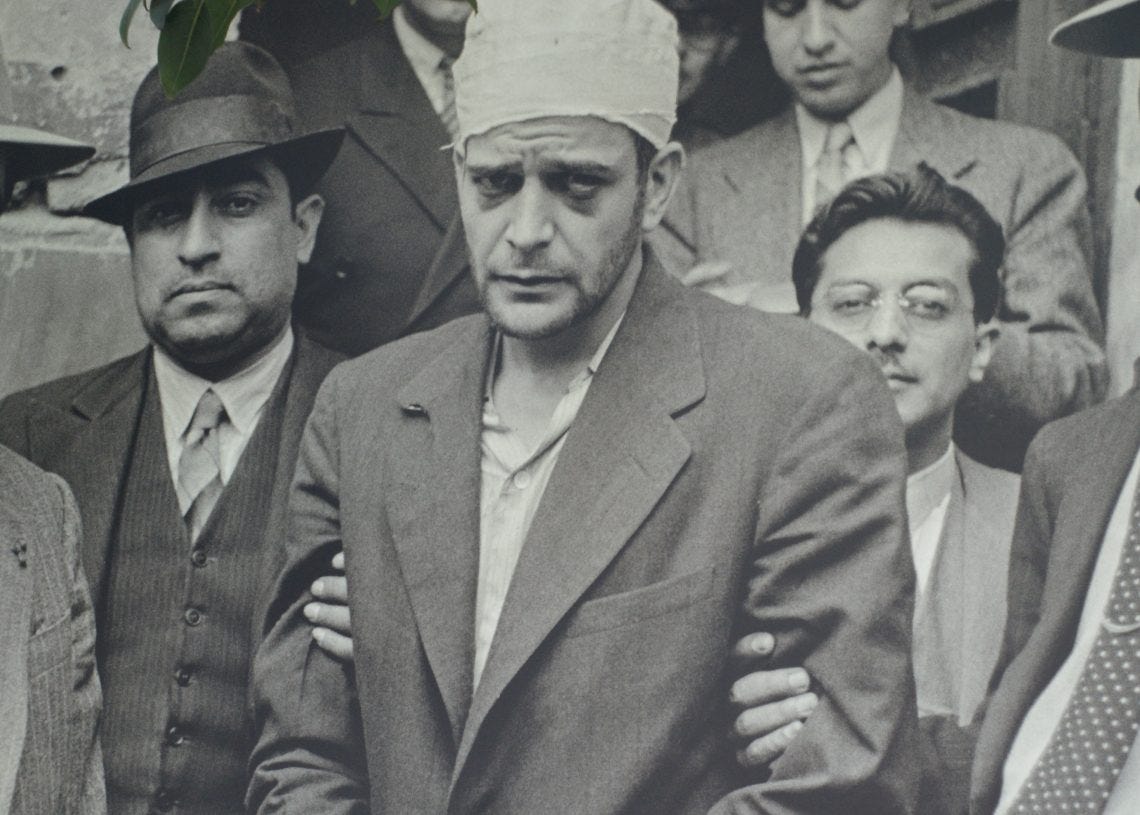
Stalin was again open to ideas for liquidating his archenemy. And so it was that Ramon’s handler and comrade, codenamed “Eitingon,” who had already infiltrated Trotsky’s European operations, met with him and his mother to order him to use his access to Trotsky’s home to personally kill the man he, as a devoted Stalinist, accepted was the greatest threat to the Marxist revolutionary project.
The plan would have Ramon lure Trotsky to his study on the pretext of showing him something he had written, kill him stealthily with a knife (in the end, an ice pick was the instrument), and escape before anyone was the wiser.
Trotsky knew his days were numbered, yet he did not make it easy to protect him. After the shooting attack, his compound was better secured, but he continued to reject his guards’ request to body check anyone and everyone before they were allowed to meet with him, and he insisted on seeing visitors alone, unguarded in his study. While he had his suspicions about Sylvia’s odd partner, who had all of a sudden taken an interest in politics and professed to be a committed Trotskyite, he felt the young man had Marxist potential.
Tasked with murder, Ramon became anxious and acted weirdly. Sylvia gathered that something was wrong, but what? As a cover story in case he was caught, Ramon carried a typewritten confession claiming he was a disaffected Trotskyite.
Late in the afternoon of August 20, 1940, Ramon entered Trotsky’s compound carrying weapons concealed in his raincoat, including a mountain-climbing axe. He was a trusted visitor, Sylvia’s boyfriend; he was not frisked. After making small talk with Trotsky in the garden where he was feeding the rabbits, the two men walked together to the study. Once inside, with Trotsky at his desk reading the paper Jac wanted him to comment on, Ramon, from behind, plunged an ice pick into Trotsky’s skull. It was anything but quiet. The Old Man’s ghastly screech was heard, and Jac was immediately captured. Trotsky lay mortally wounded.
Sylvia arrived at the compound in a state of shock. Lucid, Trotsky held on for a full day. His last slurred words showed he knew a political assassin had struck him down. He gasped that he was sure of the ultimate victory of his Fourth International — the socialist movement he founded to challenge Stalin’s conventional communism. His last words were “Go forward!”
Ramon kept his NKVD identity secret until he completed his prison sentence in 1960 and moved to Moscow. He died in Cuba in 1978 and was buried in Russia. Sylvia lived quietly in Brooklyn under her mother’s maiden name, operating a kindergarten and living with her sister. She passed away there in 1995, Ireland relates. Just about all the Soviet plotters were sent to the Gulag or killed in one of Stalin’s relentless purges.
Messianic impulse
In the end, not only did socialism not solve the Jewish problem, but it also devoured its own children. Yet socialism rebranded (the smiling face of Zohran Mamdani instead of the stony stare of Lenin) continues to vie for Jewish souls.
Unfortunately, its stiffest opposition is not Herzlian Zionism but a baal teshuva movement embedded in Orthodox millenarianism — sometimes manifesting as Hardalism, trusting the Israeli state only insofar as it moves in a messianic direction, skeptical of secularism, halachically uber-stringent, and abhorring tolerant societal norms.
Jews have long been magnetically drawn to messianic causes, to false messiahs, to the promise of halcyon days. It’s an impulse that takes over when bad things are happening. Shabbetai Tzi arrived in the wake of the Khmelnytsky Uprising (1648–1649). Marx, Lenin, and Trotsky prophesied during and after the pogroms of the late 1880s and early 1900s. Walk the alleys of Jerusalem’s Old City nearly 1,000 days after the October 7, 2023, cataclysm, and you can scent the messianic impulse is blossoming.
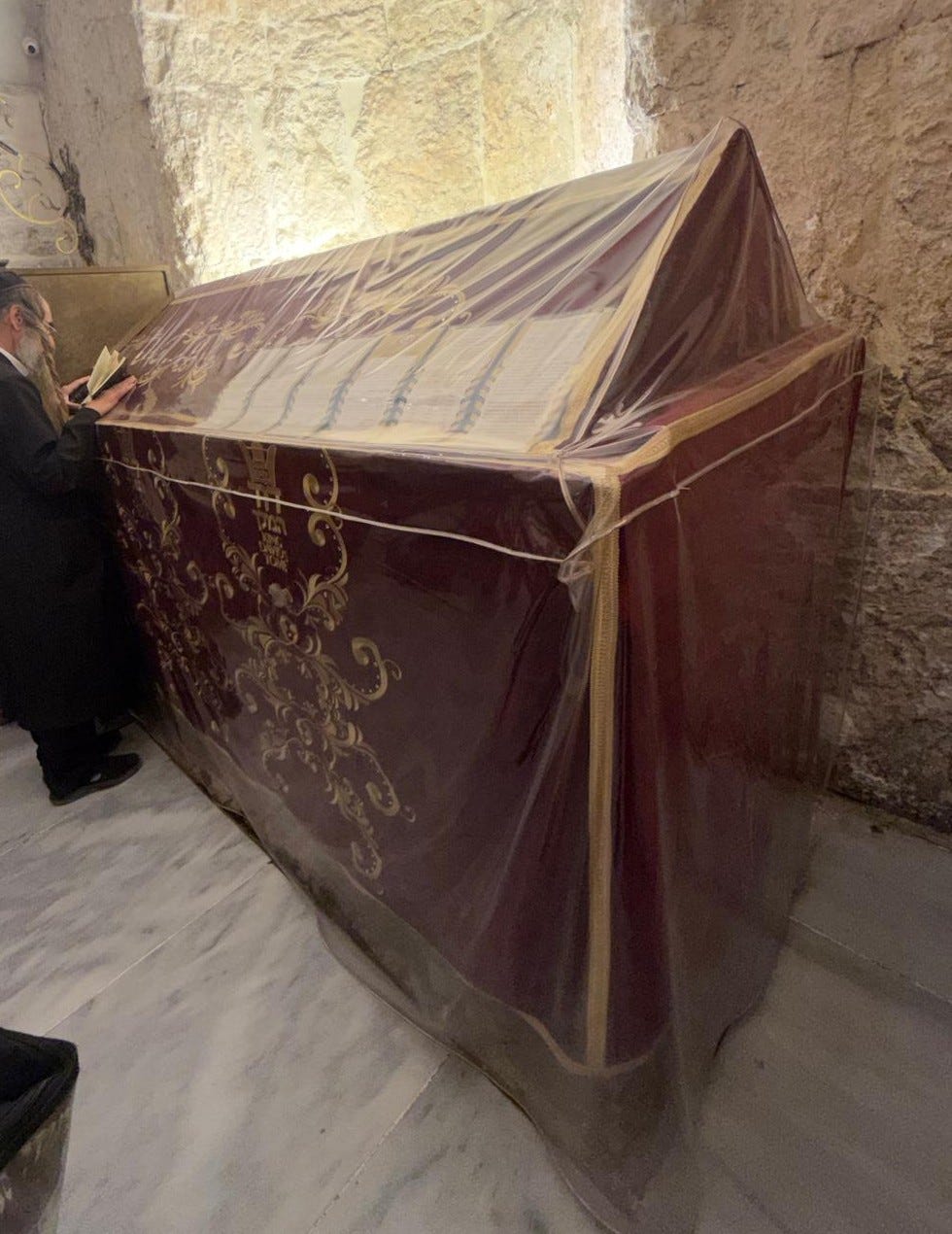
It is in this context that I can’t help but think about another upcoming yahrzeit: Ze’ev Jabotinsky’s. The leader of the Zionist opposition was born a year after Trotsky, also in the Ukraine, and likewise died in August 1940, of a heart attack in Hunter, NY, at Camp Betar.
I wish Jabotinsky’s legacy commanded greater influence today.
A classical liberal, he cherished individual liberty. He rejected both dictatorship and the excesses of majoritarian rule, and remained deeply suspicious of anyone claiming a monopoly on absolute truth.
He valued tradition but did not lead an Orthodox lifestyle. He opposed socialism but had a social conscience.
So, for me, the proper response to Trotsky’s radical negation of Jewish particularism is not a lurch toward ethnocentrism or Jewish supremacy. Nor is the answer to his atheism the ecstatic embrace of apocalyptic religiosity and some new false messiah—political or clerical—or a surrender to literal anticipations of supernatural redemption.
Jabotinsky offered a different rational and tolerant path, holding fast to Jewish power within the framework of overarching democratic values.
(*) See Trotsky and the Jews by Joseph Nedava, the late Zionist historian. (JPS/1971)
More on socialism? Read my New York Jews are in Mamdani Denial (with a new June 2026 endnote)
"He was rubbish at banter". Methinks you've been knocking around with us Brits for too long, Elliot ;). Another great interesting and informative piece. Thanks for writing this, mate.
marvellous summary by Elliot, and witty as ever