
A 'Jerusalem Day' Reckoning
I feel gratitude for living here, even as I watch with foreboding the way this city's future character is being shaped.
Jerusalem, or Zion, is at the core of Jewish civilization, regardless of partisan politics, theology, or tribal affiliation. It is fixed in our liturgy, memory, history, and longing, and ought to transcend factional divides to belong to the entire Jewish people.
I am writing mainly to my pro-Israel Diaspora friends, many of them Orthodox, who identify as religious Zionists and will mark Jerusalem Day on May 15, the 28th of Iyar, to commemorate the city’s reunification in the 1967 Six-Day War. I am not addressing “as-a-Jews” who delude themselves into thinking they can redefine what it means to be a Jew by excising Eretz Israel.
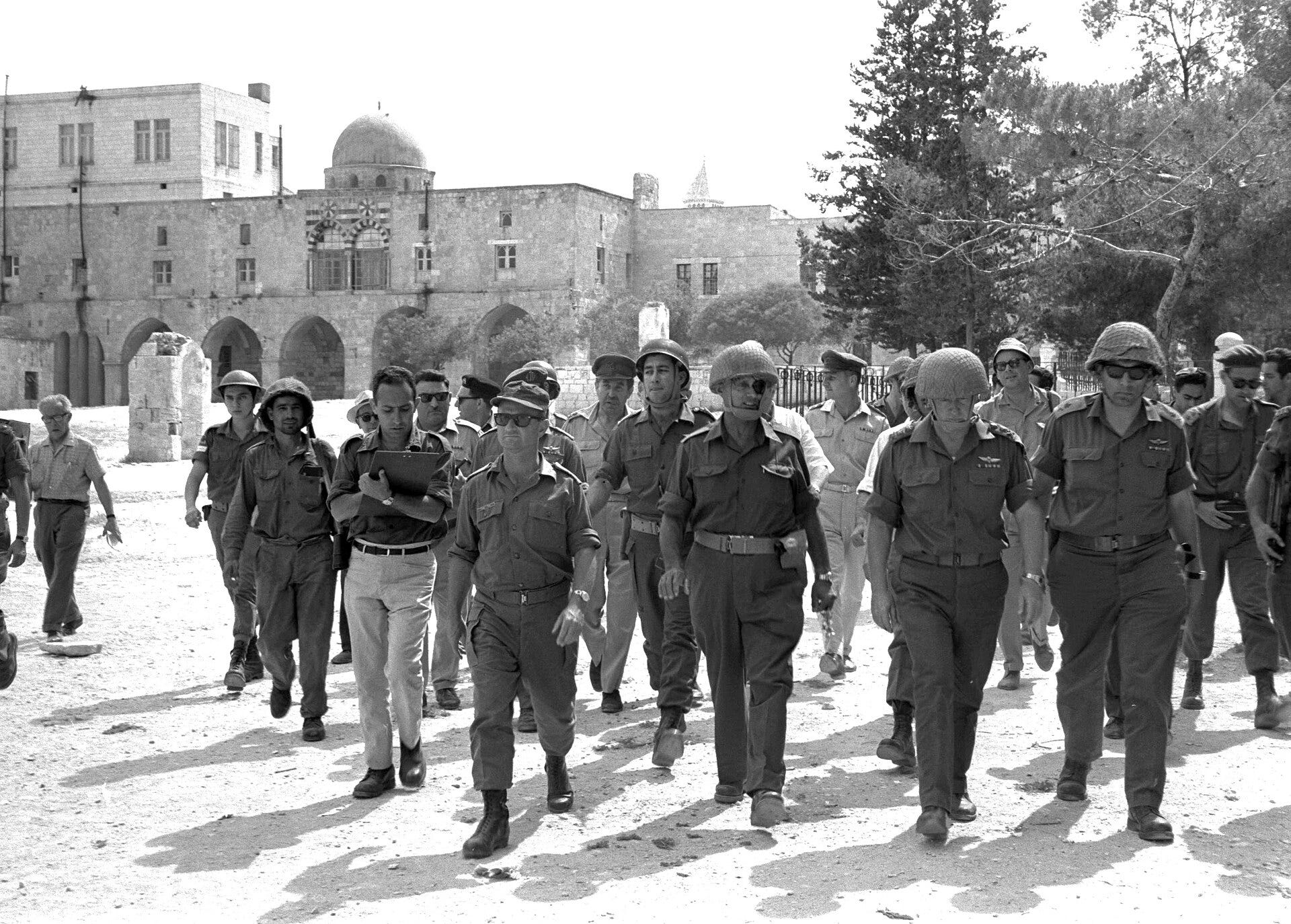
Those who care about Israel know that from 1948 to 1967 — 19 long years — Jews could not cross the Mandelbaum Gate to reach the Jordanian-held Old City or touch the stones of the Western Wall. Many of you have spent time in Israel, sent your children here on gap years, maybe own a holiday home, and understand that, as much as you love it, Jerusalem is not a dreamland.
Yet, no matter how connected or savvy you may be, you probably cannot help but relate to Jerusalem as a kind of Jewish Disney World: meaningful, immersive, emotionally charged, yet ultimately a construct removed from the Jerusalem that is my reality.
The city is built on hills, embedded into the West Bank with Judea to the south and Samaria to the north. It is, therefore, misleading to speak of east and west Jerusalem in simple geographic or political terms. It is the largest city in Israel in terms of population and, arguably, the poorest (38.6% of its people live below the poverty line). Overall, it is efficiently managed by Mayor Moshe Lion: our streets are cleaned, garbage is picked up, recycling is encouraged, and multiple new bus routes have made getting around the city easier.
Jerusalem is blessed to have the Hebrew University, which, in fact, preceded the creation of the State. We have two world-class medical centers and first-rate medical services. Our semi-desert climate means that, despite climate change, we have low humidity in the summer. In terms of ambiance, there is nothing like taking a Friday night stroll in Jerusalem as the city grows calmer and strangers wish one another Shabbat shalom.
Presently, and for the foreseeable future, our air is heavily polluted with dust and debris because Jerusalem is a city in constant construction; it has run out of space, so we have to build upwards. The skyline is dotted with hundreds of construction cranes. I do not know who can afford to live in all the fancy buildings being built, but that is another matter. The streets are being excavated for the expansion of the light rail and for additional stations for the fast train to Tel Aviv. Do not even think about driving in town: King George Street is cratered like the lunar surface.
Few countries recognize Jerusalem — not even west Jerusalem — as Israel’s capital. When Israel moved the Knesset here in December 1949, it triggered international uproar, and that basic reality has not fundamentally changed. Only a handful of countries — the United States, Guatemala, Honduras, Kosovo, Papua New Guinea, and Fiji — maintain embassies in Jerusalem. Paraguay’s embassy is situated in Mevaseret Zion, and Argentina says it will move its embassy here. The Europeans remain in Tel Aviv.
Successive Israeli governments have acted with bipartisan consistency to consolidate Jewish control of Jerusalem. They built a ring of strategically justifiable neighborhoods — Gilo and Har Homa in the south; East Talpiot to the east; Ramat Eshkol, French Hill, Pisgat Ze’ev, Neve Yaakov, Ramot, and Ramat Shlomo in the north — mostly on then-vacant hills, reshaping the city’s geography.
However, we are now going beyond securing Jerusalem. The Binyamin Netanyahu government is making life for Jerusalem’s Palestinian Arabs as cold-hearted, close-minded, and uncivil as Jewish people are made to feel in cities abroad that have embraced the “globalize the intifada” mantra.
Under successive Netanyahu governments — especially the current cabinet, comprised of religious ultra-nationalists, Kahanists, and haredim, as well as the prime minister’s own populist Likud — Orthodox Jewish groups are moving into densely populated Arab neighborhoods — Silwan (the City of David), the Old City’s Muslim Quarter, Sheikh Jarrah, and elsewhere. If this requires legally displacing Arab families that have lived there for decades, so be it. Under Israel’s legal system, a Jew may reclaim property lost in east Jerusalem when Jordan took it in 1948, but a Palestinian Arab has no legal standing to sue for confiscated property in west Jerusalem.
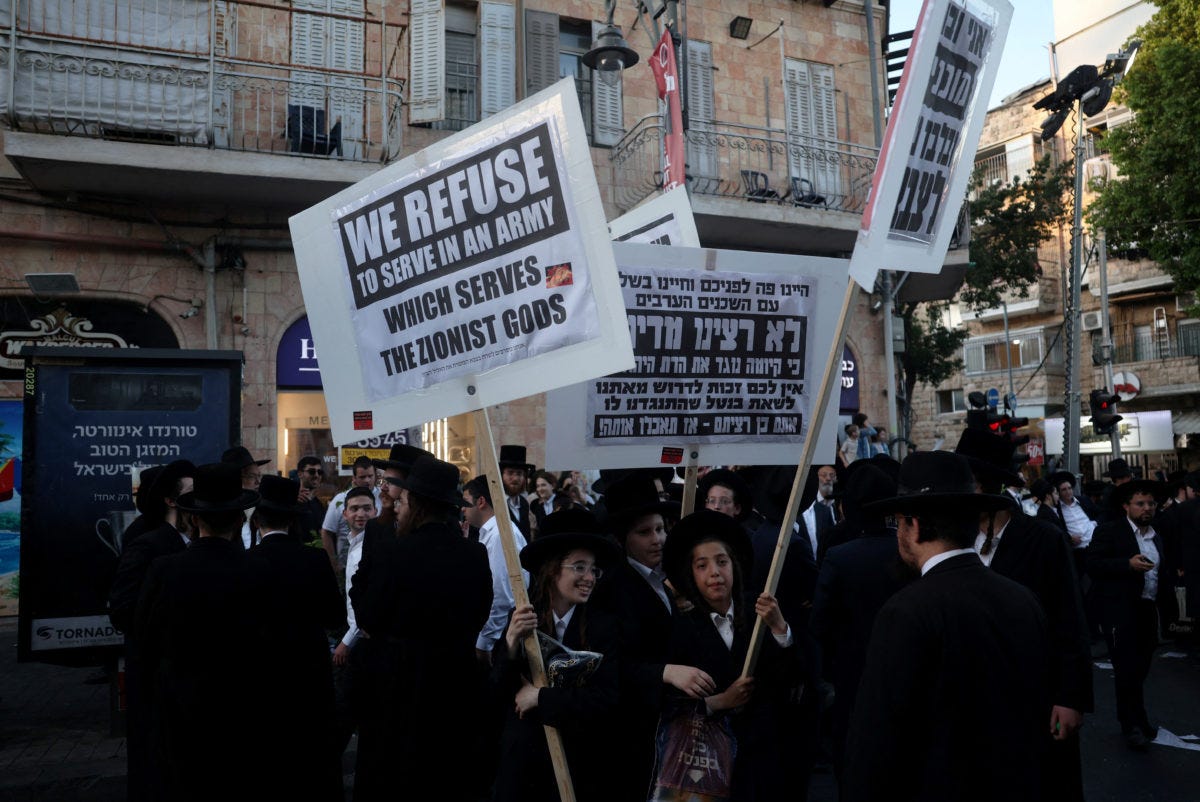
It troubles me that Jerusalem lacks a Zionist majority. Our demographic reality reflects a Zionist deficit. Of our one million residents, roughly 38% are Palestinian Arabs and 57% are Jews. Of this Jewish population, half of all Jewish Jerusalemites are Haredim. A majority of the city’s elementary pupils, therefore, are educated outside a Zionist framework — either in Arabic-language systems or non-Zionist (often anti-Zionist) Haredi schools.
The Zionist deficit is also reflected in the electoral map. In the 2022 Knesset elections, non-Zionist parties (UTJ and Shas) won 42% of the Jerusalem vote; their constituencies largely do not serve in the IDF. Netanyahu has promised a law that would enshrine draft dodging, but he has failed to deliver. When you add the fragmented Zionist vote — split between the populist Likud (19%), religious ultra-nationalist and Kahanist-aligned factions (14%), and a sliver of the tolerant religious and secular Zionist minority — the result is a paradox: Zion lacks a Zionist majority.
For many, the capital is unwelcoming. Non-observant young people often leave, deterred by limited economic opportunity and a public sphere shaped by ultra-Orthodox coercion and norms. Unlike Orthodox institutions, progressive Orthodox, Masorti, and Reform synagogues get no state aid. Their rabbis can’t officiate at state-sanctioned ceremonies.
Posters or advertisements that show women’s images are routinely vandalized. There is a total shutdown of public transport on Shabbat, preventing those without cars from attending social occasions — unless they can afford taxis.
According to Nir Hasson, who does an admirable job covering Jerusalem for Haaretz, among Jerusalem’s Jewish young people surveyed, 35% define themselves as Haredi, 23% as Orthodox, 26% as traditional or Orthodox lite, and 15% as non-observant.
Street signs with Arabic lettering are defaced. Hate crimes — spitting, kicking, stone-throwing — against Christians in the Old City have been spiking over the past year. At the end of March, during the war with Iran, Jerusalem’s Latin Patriarch, Cardinal Pierbattista Pizzaballa, was blocked by police from reaching the Church of the Holy Sepulcher on Palm Sunday, even as Jewish prayer services were taking place in Haredi neighborhoods just outside the Old City.
The golden Dome of the Rock and the Aqsa Mosque are situated on the Temple Mount, a holy site for Muslims. Yet precisely here, the government’s approach to Jerusalem’s Muslim Arabs is crudely antagonistic. Visits by Jews to the Temple Mount, once broadly prohibited by Orthodox halachic clerical authorities, have surged since 2009. In 2025, over 60,000 Jewish supplicants ascended the Mount to pray, recite Torah, and prostrate themselves. Ultra-nationalist Orthodox (Hardal) politician-theologians have overturned mainline Orthodox taboos. Legal constraints have been reversed. Spurred on by the Netanyahu government and a Kahanist minister of internal security, the status quo that respected Muslim sensibilities on the Temple Mount has been discarded.
The city’s Arabs have limited political rights in Jerusalem. While they do hold blue Israeli ID cards and can access the same health and welfare services available to me, they cannot vote in Knesset elections. They are eligible to vote in municipal elections but largely refrain as a form of protest. This leaves them with no political leverage, even as they receive subpar service from the city.
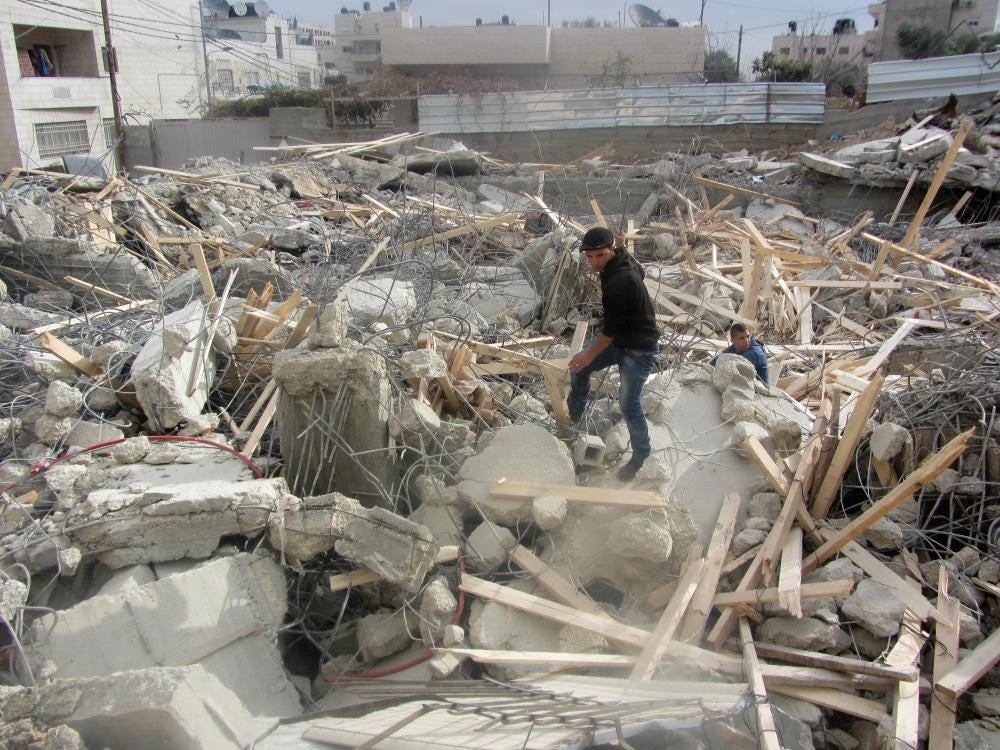
It is difficult for Palestinians to obtain building permits, so “illegal” structures are routinely demolished. In Silwan’s al-Bustan neighborhood, Palestinian homes were demolished to make way for an archaeological-tourism park. In neighborhoods like Kafr Aqab and Ras Khamis, tens of thousands of Arabs live within Jerusalem’s city boundaries but beyond the security barrier. They receive virtually no services, are still obliged to pay taxes, and must pass through a checkpoint to go and come. Economic disparities are stark: poverty rates stand at 31% among Jews and 60% among Arabs.
On Thursday night, tens of thousands of mostly adolescent Hardal youngsters will parade in and around the Old City at taxpayer expense, with additional subsidies from so-called Torani NGOs. Some will go here and there to prostrate themselves. And if history is any guide, you can expect Arabs to be on the receiving end of abuse and harassment, with enthusiastic chants like “Death to Arabs,” “Burn Their Villages,” and “Jews are Soulful, Arabs are Bastards” pounding your eardrums.
I am embarrassed by this pogrom-like behavior; after all, the authorities are Jewish, and the police are Jewish, and everyone can reasonably infer how the day will likely play out if the young people — miseducated as they have been — are left to their own devices.
As for me, I will be celebrating Jerusalem Day quietly and with gratitude at home. My grandparents never managed to reach this city of their longings. I do not take it for granted that I am here.
Yet it pains me that a considerable portion of my fellow Jewish Jerusalemites are prone to intolerance, religious coercion in the public square, anti-Zionism, or, alternately, a chauvinistic Orthodox ultra-nationalism that repulses me.
On Jerusalem Day, we need to ask ourselves: After 2,000 years, what good is power and sovereignty if it is not accompanied by responsibility, grace, and wisdom?